Quick Answer
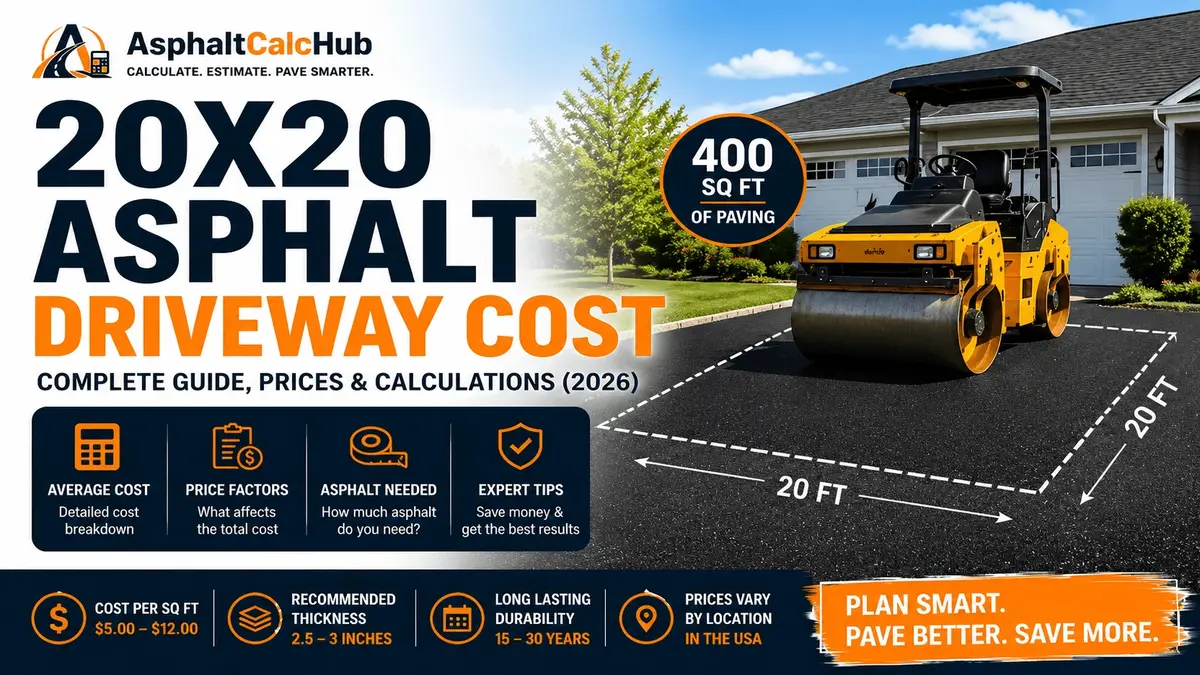
A 20×20 asphalt driveway cost typically ranges from $2,000 to $4,800, with most homeowners paying around $3,200. At 400 square feet, installation usually costs $5–$12 per square foot, depending on asphalt thickness, site preparation, labor, and your location.
A 20×20 asphalt driveway covers 400 square feet and is a common size for two standard vehicles. This guide explains the average installation cost, material requirements, cost factors, repair costs, and ways to save money.
In This Guide, You’ll Learn
How Much Does a 20×20 Asphalt Driveway Cost?
For many homeowners, a 20×20 driveway is the “sweet spot.” It’s large enough for two standard vehicles without taking up unnecessary yard space or significantly increasing paving costs.
The exact price, however, depends on much more than the driveway’s size. Factors like asphalt thickness, base preparation, drainage, and local labor rates all play a role in the final estimate.
On average, homeowners can expect the following price ranges:
| Installation Quality | Estimated Cost |
| Basic Installation | $2,000–$2,700 |
| Standard Residential Installation | $2,700–$3,800 |
| Premium Installation | $3,800–$4,800+ |
The final price varies because every property is different. A flat lot with good soil and an existing solid base costs less to pave than a sloped driveway that requires excavation, grading, drainage improvements, and a new compacted stone base.
Low-End Cost
A basic installation generally costs around $2,000–$2,700.
This price usually assumes:
- Minimal excavation
- Good existing ground conditions
- Standard 2-inch asphalt layer
- Little or no drainage work
- Easy equipment access
Lower-end pricing is often available for new subdivisions where contractors can complete several nearby projects at the same time, reducing transportation and equipment costs.
Average Cost
A typical homeowner pays about $3,200 for a professionally installed 20×20 asphalt driveway.
A standard installation often includes:
- Site preparation
- Proper grading
- Compacted gravel base
- 2.5–3 inches of hot-mix asphalt after compaction
- Roller compaction
- Final cleanup
For most homes, this provides the best balance between durability and value.
High-End Cost
Premium projects generally range from $3,800 to $4,800 or more.
Higher costs usually result from:
- Removing an existing driveway
- Extensive excavation
- Thick asphalt layers
- Additional gravel base
- Drainage improvements
- Decorative edging
- High-cost labor markets
Homes in cities with higher labor rates or regions where asphalt prices fluctuate frequently may fall into this range.
20×20 Asphalt Driveway Cost Breakdown
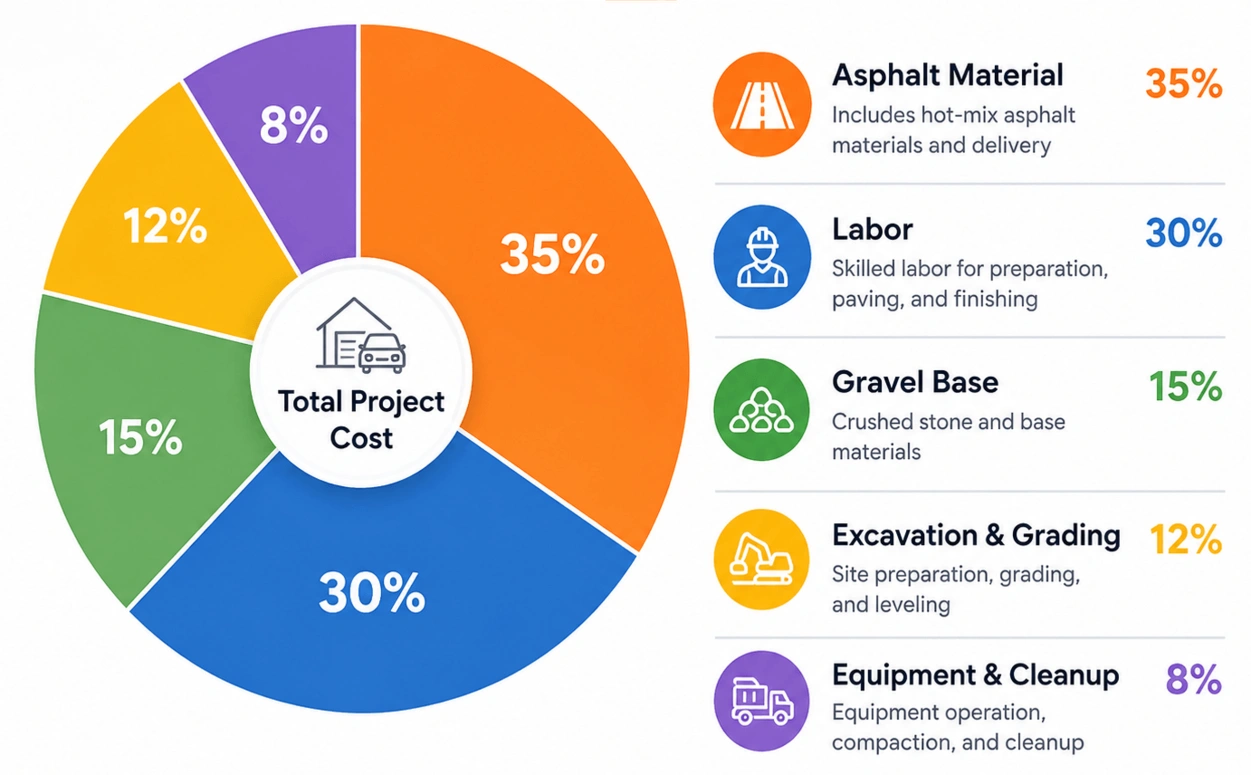
Knowing where your money goes makes it easier to compare contractor quotes. Two estimates with the same total price may include very different levels of work.
Here’s how the budget is typically distributed for a standard residential installation.
Typical Cost Breakdown:
- Asphalt material: 30–40%
- Labor: 25–35%
- Gravel base: 10–20%
- Excavation & grading: 5–15%
- Equipment & cleanup: 5–10%
- Drainage and permits: Varies
1. Asphalt Material
Many homeowners assume asphalt is the biggest expense. In reality, it’s only part of the total project cost. The quality of the asphalt mix, local oil prices, and transportation distance from the asphalt plant can all influence material costs.
2. Labor
Labor often surprises homeowners because it includes much more than simply laying asphalt. Contractors must prepare the site, grade the surface, operate paving equipment, compact the asphalt, and finish the edges. In many projects, labor accounts for nearly one-third of the total cost.
3. Gravel Base
A properly compacted gravel base is one of the most important parts of a long-lasting driveway.
A weak foundation often leads to:
- Cracking
- Depressions
- Water pooling
- Premature failure
In my experience reviewing residential paving estimates, the biggest difference between a driveway that lasts 20 years and one that starts cracking after a few winters is often the quality of the base—not the asphalt layer itself. If one contractor includes full excavation and a well-compacted aggregate base while another plans to pave over unstable ground, the lower quote may end up costing much more in future repairs.
Did You Know: A well-compacted gravel base often has a bigger impact on driveway lifespan than adding an extra inch of asphalt.
4. Excavation and Grading
If the site isn’t level, contractors may need to remove soil, reshape the ground, and establish the proper slope for drainage before paving begins.
Although this adds to the upfront cost, it’s one of the best investments you can make because standing water is one of the leading causes of premature asphalt damage.
Mistake to Avoid: Skipping proper grading to save money often leads to drainage problems that are far more expensive to fix later.
5. Cost Per Square Foot
For most U.S. homeowners, asphalt driveway pricing is based on the total square footage.
A 20×20 driveway contains exactly 400 square feet, making it easy to estimate costs using the average price per square foot.
| Price Level | Cost per Sq Ft | Total for 400 Sq Ft |
| Economy | $5–$6 | $2,000–$2,400 |
| Standard | $6.50–$9.50 | $2,600–$3,800 |
| Premium | $9.50–$12 | $3,800–$4,800 |
Remember that square-foot pricing usually covers the paving work itself. Services such as old driveway removal, drainage improvements, retaining edges, or permit fees may be listed separately on your estimate.
Note: If a contractor quotes an unusually low price per square foot, ask whether the estimate includes excavation, gravel base installation, and the asphalt thickness after compaction. Those details have a much bigger impact on long-term performance than the price alone.
How Much Asphalt Is Needed for a 20×20 Driveway?
Before starting your project, it’s helpful to know how much asphalt a 20×20 driveway requires. This not only helps you understand contractor estimates but also lets you verify material quantities.
A 20×20 driveway covers 400 square feet, and the amount of asphalt needed depends on the finished pavement thickness.
Asphalt Quantity by Thickness
| Compacted Asphalt Thickness | Asphalt Needed (Approx.) |
| 2 inches | 4–5 tons |
| 2.5 inches | 5–6 tons |
| 3 inches | 6–7 tons |
| 4 inches | 8–9 tons |
Most residential driveways perform well with a 2.5- to 3-inch compacted asphalt layer, which typically requires 5–7 tons of hot-mix asphalt.
If you’re estimating materials yourself, remember that contractors order a little extra asphalt to account for waste, edge trimming, and minor variations during paving.
Contractors usually order slightly more asphalt than the calculated amount to account for waste, edge trimming, and minor variations during paving. Learn how an asphalt waste factor affects material estimates before placing an order
Note: For the most accurate estimate, use an Asphalt Calculator that factors in driveway dimensions, thickness, and waste percentage.
Factors That Affect a 20×20 Asphalt Driveway Cost
It’s common for two neighbors with identical 20×20 driveways to receive very different quotes. That’s because contractors price the entire project—not just the asphalt. Site conditions, drainage, labor, and base preparation all influence the final cost.
Asphalt Thickness
Thicker asphalt costs more because it requires additional material and labor.
A 2-inch surface may be sufficient for light residential use, while 3 inches is often recommended for two-car driveways that see regular daily traffic.
If heavy pickup trucks, work vans, or RVs use the driveway frequently, a thicker pavement structure may provide better long-term performance.
If you’re unsure which thickness is right for your project, ask your contractor to explain why they recommend it instead of accepting a one-size-fits-all answer.
Base Preparation
One of the biggest factors affecting both cost and durability is the gravel base underneath the asphalt.
If the existing base is stable, contractors may only need minor grading. However, soft soil or poor drainage may require excavation and a new compacted aggregate base, increasing the total project cost.
In many paving estimates I’ve reviewed, the difference between a driveway that lasts decades and one that develops early cracks often comes down to proper base preparation—not simply adding more asphalt.
Contractor Red Flag: If a quote doesn’t mention the gravel base thickness, ask for clarification before signing the contract.
Site Grading and Drainage
Water is one of asphalt’s biggest enemies.
If rainwater can’t drain away from the driveway, it can weaken the base and lead to cracking, potholes, and edge failure over time.
Driveways that require grading or drainage improvements usually cost more upfront but often last significantly longer.
Other Factors That Can Affect the Price
Besides the condition of your driveway, several smaller factors can also influence the final installation cost.
- Location: Asphalt prices and labor rates vary across the U.S. Projects in major cities or areas farther from an asphalt plant often cost more.
- Accessibility: A driveway that’s easy for paving equipment to reach is usually less expensive to install. Narrow entrances, steep slopes, or limited access can increase labor time.
- Removing an Existing Driveway: If an old asphalt or concrete driveway must be demolished and hauled away before paving, expect your total project cost to increase.
- Permits: Some cities or counties require permits for driveway replacement or expansion, particularly if the work affects sidewalks or public roads.
- Seasonal Demand: Spring and summer are the busiest paving seasons. During peak demand, prices may be slightly higher and scheduling may take longer.
Recommended Asphalt Thickness for a 20×20 Driveway
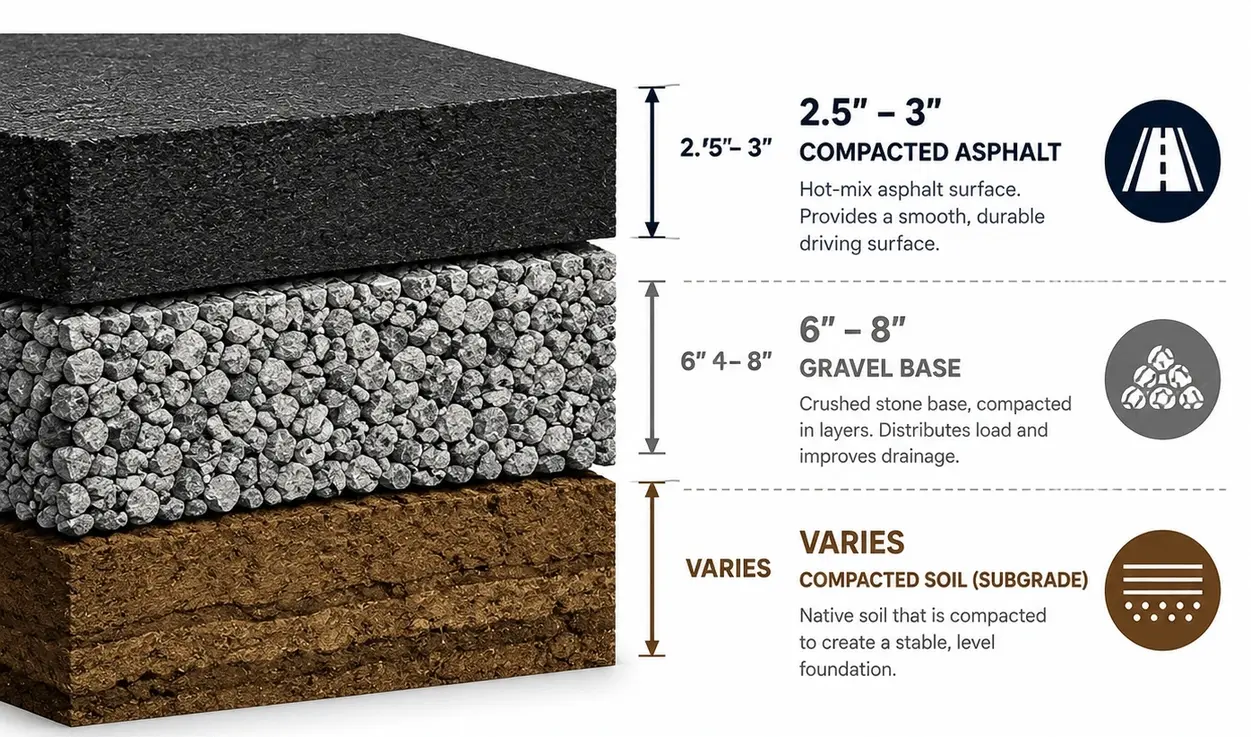
Choosing the right asphalt thickness isn’t just about durability—it’s also about getting the best value for your money. Installing more asphalt than you need increases costs, while too little can shorten your driveway’s lifespan.
| Compacted Thickness | Best For | Expected Lifespan* |
| 2 inches | Light residential use | 15–20 years |
| 2.5 inches | Most two-car driveways | 18–25 years |
| 3 inches | Heavy daily traffic, pickups | 20–30 years |
| 4 inches | Commercial or heavy-duty use | 25–30+ years |
Actual lifespan depends on climate, drainage, maintenance, and the quality of the base.
For most homeowners, 2.5 to 3 inches of compacted hot-mix asphalt offers the best balance between cost, durability, and long-term value.
Quick Tip: Paying for a properly compacted gravel base usually provides a better return than simply adding another inch of asphalt.
Is a 20×20 Driveway Big Enough?
For most households, yes.
A 20×20 driveway provides 400 square feet of parking space, which is generally enough for two standard passenger vehicles parked side by side.
Keep in mind that vehicle size isn’t the only consideration. You’ll also want enough space to open doors comfortably and walk around parked vehicles.
Real-World Example
Imagine a household with two midsize SUVs. A 20×20 driveway provides enough room to park both vehicles comfortably in most cases. However, if one vehicle is a full-size pickup with an extended cab, maneuvering space becomes much tighter, especially near the garage.
If you’re planning for larger vehicles or expect your parking needs to grow, a 20×30 or 20×40 driveway may be a better long-term investment.
20×20 vs. Other Common Driveway Sizes
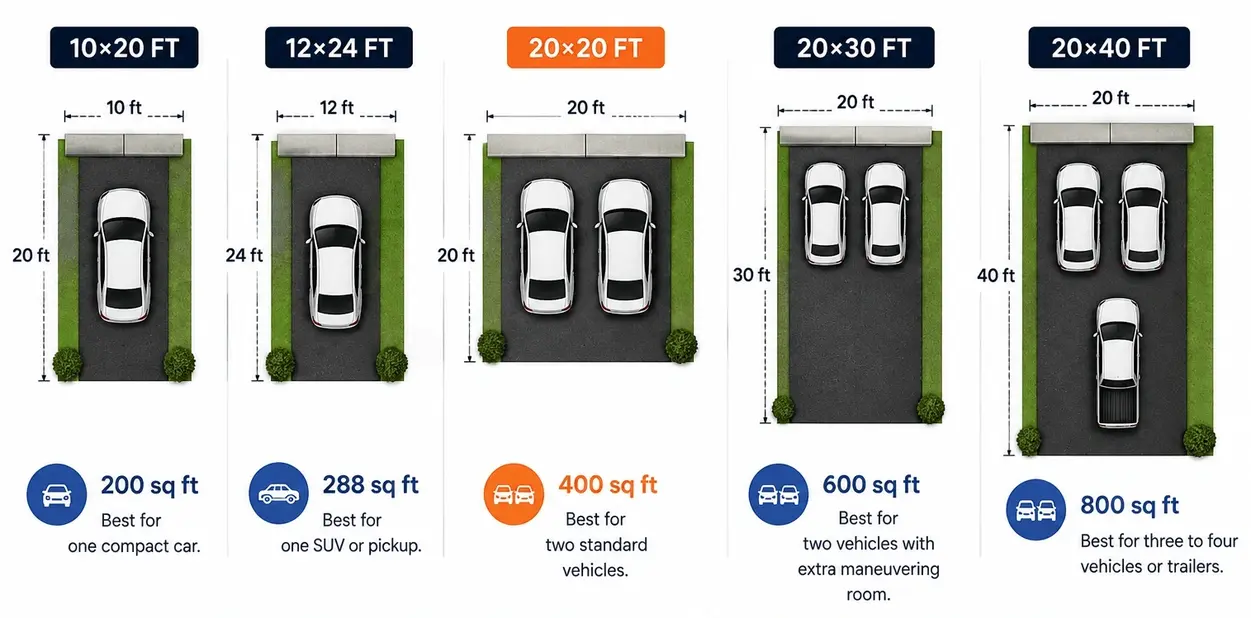
A 20×20 driveway is a practical choice for many homeowners, but it isn’t the right size for every property. If you’re planning a new driveway, comparing common dimensions can help you decide whether you need more—or less—parking space.
| Driveway Size | Area | Best For |
| 10×20 ft | 200 sq ft | One compact car |
| 12×24 ft | 288 sq ft | One SUV or pickup |
| 20×20 ft | 400 sq ft | Two standard vehicles |
| 20×30 ft | 600 sq ft | Two vehicles with extra maneuvering room |
| 20×40 ft | 800 sq ft | Three to four vehicles or trailers |
| 24×24 ft | 576 sq ft | Larger SUVs and easier parking |
A 20×20 driveway offers the best balance of affordability and functionality for most two-car households. However, if you regularly park oversized trucks, trailers, or recreational vehicles, choosing a larger size now may cost less than expanding the driveway later.
Internal Link Suggestion: Link to your 20×40 Asphalt Driveway Cost guide for homeowners considering a larger driveway.
Old Driveway Removal Cost
If you’re replacing an existing driveway, removal costs should be included in your budget.
Contractors usually charge separately for demolition, hauling away debris, and preparing the site before installing new asphalt.
Average Removal Costs
Removing an old asphalt driveway usually costs $400–$1,200 for a 20×20 area, while removing concrete generally costs $800–$2,400 because demolition and disposal are more labor-intensive.
For a 20×20 driveway (400 sq ft), removal typically costs:
- Old asphalt: $400–$1,200
- Concrete: $800–$2,400
The final price depends on:
- Pavement thickness
- Equipment access
- Disposal fees
- Local landfill costs
- Recycling availability
Overlay vs. Full Replacement
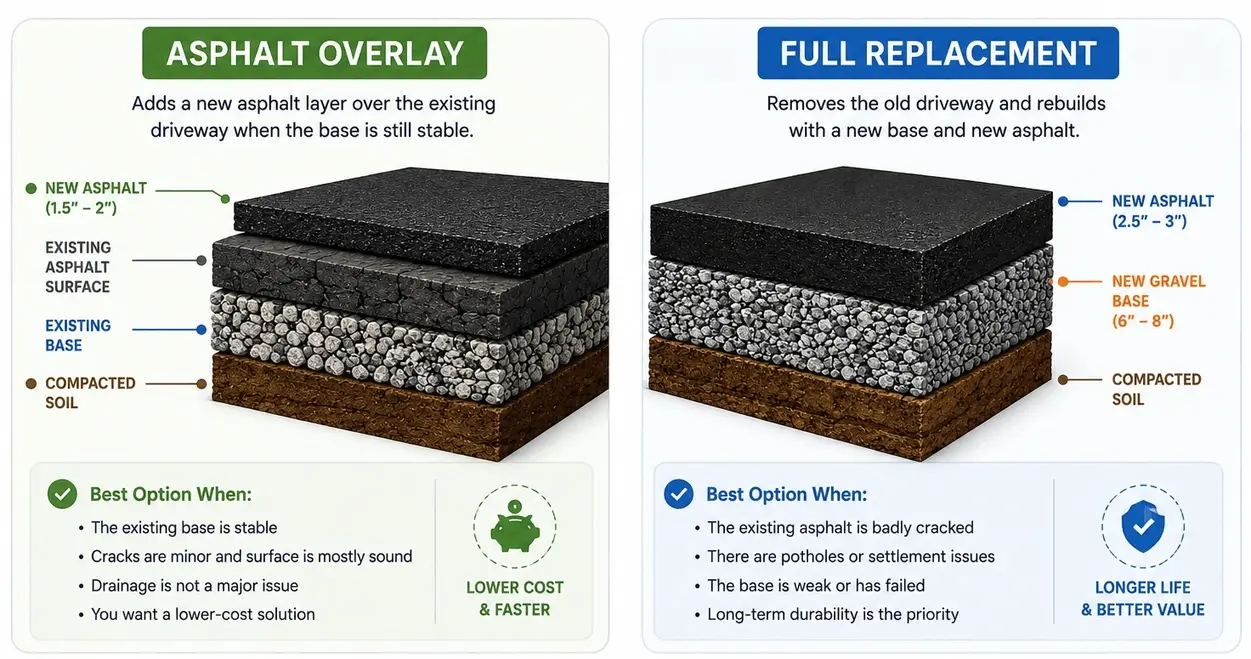
Sometimes contractors recommend an asphalt overlay instead of complete replacement.
An overlay adds a new asphalt layer over the existing surface, making it less expensive than removing the entire driveway.
An overlay may be a good option when:
- The existing base is stable
- There are only minor cracks
- Drainage problems are minimal
- There are no major potholes or structural failures
A full replacement is usually the better choice if the driveway has widespread cracking, severe settlement, or a failed base.
A trustworthy contractor should inspect the existing base before recommending an overlay. If the foundation has already failed, covering it with new asphalt usually provides only a temporary solution.
Read More Guide:
20×20 Asphalt Driveway Repair Cost
Even a well-built asphalt driveway will eventually need repairs. Addressing small problems early is usually much less expensive than waiting until major damage develops.
Average Repair Costs
| Repair Type | Typical Cost |
| Crack Filling | $150–$500 |
| Pothole Repair | $250–$800 |
| Edge Repair | $300–$1,000 |
| Asphalt Overlay | $1,200–$2,800 |
| Full Replacement | $2,000–$4,800+ |
Crack Filling
Small cracks allow water to reach the base beneath the asphalt. Sealing them early helps prevent larger, more expensive repairs.
Pothole Repair
Potholes are often caused by water infiltration and repeated freeze-thaw cycles. Proper repairs remove damaged material before new asphalt is installed, rather than simply filling the hole.
Edge Repair
Driveway edges often deteriorate because they’re less supported than the center. Reinforcing damaged edges early helps prevent larger sections from breaking away.
Asphalt Overlay
If the driveway surface is worn but the base remains in good condition, an overlay can restore the appearance and extend the driveway’s life without the cost of full replacement.
Full Replacement
When the foundation has failed, replacement is usually the most cost-effective long-term solution.
Fixing small cracks early is one of the easiest ways to avoid expensive repairs later. Water is the biggest enemy of asphalt, and even narrow cracks can eventually lead to potholes if left untreated.
Quick Tip: Repairing small cracks within the first year they’re noticed is almost always cheaper than paying for an overlay or full replacement later.
Asphalt vs. Concrete: Which Costs Less?
Many homeowners compare asphalt and concrete before making a decision. While asphalt usually costs less upfront, concrete often lasts longer with less frequent resurfacing.
The comparison below highlights the key differences so you can choose the option that best fits your budget and long-term plans.
| Feature | Asphalt | Concrete |
| Installation Cost | Lower | Higher |
| Repair Cost | Lower | Higher |
| Installation Time | Faster | Slower |
| Cold Climate Performance | Excellent | Good |
| Hot Climate Performance | Good | Excellent |
| Maintenance | Moderate | Low |
| Typical Lifespan | 15–30 years | 30–40+ years |
Choose Asphalt If You:
- Want a lower upfront cost
- Need faster installation
- Live in a colder climate
- Prefer easier and less expensive repairs
Choose Concrete If You:
- Plan to stay in your home for decades
- Prefer lower long-term maintenance
- Don’t mind paying more initially
- Want more decorative finish options
How Long Does a 20×20 Asphalt Driveway Last?
A professionally installed asphalt driveway typically lasts 15 to 30 years, depending on traffic, climate, maintenance, and the quality of the base.
Proper maintenance can significantly extend its lifespan.
Typical Maintenance Timeline
Maintenance Timeline:
- 6–12 months: Avoid heavy loads while the asphalt fully cures.
- Every 3–5 years: Apply a sealcoat.
- As needed: Seal cracks promptly.
- After 15–20 years: Consider resurfacing if the base is still sound.
- After 20–30 years: Replace the driveway if structural damage becomes widespread.
A small investment in routine maintenance can delay major repairs and help protect the original installation.
Real Project Cost Examples
The examples below are based on common residential paving scenarios and show how site conditions can significantly affect the final cost—even when the driveway size remains the same.
Example 1
A homeowner in Ohio installed a new 20×20 asphalt driveway on a level lot with good soil conditions. Since only minor grading and a standard gravel base were needed, the project was completed in one day for about $3,100.
Example 2
A homeowner replacing an old asphalt driveway paid approximately $4,100 after demolition, debris removal, and minor grading were included in the estimate.
Example 3
Another project required additional excavation because the original soil was soft and retained water. After installing a thicker gravel base and improving drainage, the total project cost increased to around $4,700.
Example 4
In a colder northern climate, a contractor recommended a 3-inch asphalt layer over a reinforced base to improve freeze-thaw durability. The project cost roughly $4,500 but is expected to provide a longer service life.
These examples show why two homeowners with the same driveway size can receive very different estimates. The condition of the site often has a greater impact on price than the asphalt itself.
How to Save Money on a 20×20 Asphalt Driveway Without Sacrificing Quality
Most homeowners can reduce their project cost without sacrificing quality. The key is knowing where it’s safe to save—and where cutting corners often leads to expensive repairs later.
Here are a few smart ways to reduce costs while maintaining quality:
- Get at least three written estimates from reputable contractors.
- Compare the scope of work, not just the total price.
- Ask for the compacted asphalt thickness in writing.
- Make sure the estimate includes a properly compacted gravel base.
- Repair drainage issues before paving to avoid future damage.
- Schedule the project during the contractor’s slower season if possible.
If possible, request estimates from contractors within the same week. Material prices can change over time, making it easier to compare quotes fairly when they’re prepared under similar market conditions..
Quick Tip: A quote that’s $500 cheaper can become the most expensive if it skips proper base preparation.
Contractor Checklist Before You Hire
Before accepting a quote, take a few minutes to review these essentials. A reputable contractor should have no problem answering these questions or including the details in a written estimate.
| Checklist | Yes/No |
| Licensed and insured | ☐ |
| Written estimate provided | ☐ |
| Asphalt thickness after compaction specified | ☐ |
| Base thickness specified | ☐ |
| Drainage plan included | ☐ |
| Cleanup and debris removal included | ☐ |
| Warranty offered | ☐ |
A detailed estimate helps you compare contractors fairly and reduces the risk of unexpected costs later.
FAQ
How much does a 20×20 asphalt driveway cost?
A 20×20 asphalt driveway typically costs $2,000–$4,800, with the average homeowner spending about $3,200. Final pricing depends on labor, asphalt thickness, site preparation, and local material costs.
How much asphalt is needed for a 20×20 driveway?
Most residential projects require 5–7 tons of hot-mix asphalt, assuming a finished thickness of 2.5–3 inches.
Is a 20×20 driveway big enough for two cars?
Yes. A 20×20 driveway provides 400 square feet, which is generally enough for two standard passenger vehicles. Two full-size pickup trucks may fit, but space will be limited.
How much does it cost to remove an old driveway?
Removing an old asphalt driveway typically costs $400–$1,200 for a 20×20 area, while concrete removal generally ranges from $800–$2,400.
How much does it cost to repair a 20×20 asphalt driveway?
Minor repairs such as crack filling may cost $150–$500, while a full asphalt overlay typically ranges from $1,200–$2,800. A complete replacement generally costs $2,000–$4,800 or more.
Is asphalt cheaper than concrete?
Yes. Asphalt usually has a lower upfront installation cost and is less expensive to repair. Concrete generally costs more initially but can last longer with proper maintenance.
How long does an asphalt driveway last?
A professionally installed asphalt driveway typically lasts 15–30 years when built on a solid base and maintained with routine crack sealing and sealcoating.
Can you install asphalt over an existing driveway?
Yes, but only if the existing driveway has a stable foundation and minimal structural damage. If the base has failed, a full replacement is the better long-term solution.
Conclusion
A 20×20 asphalt driveway offers an excellent balance of affordability, durability, and everyday practicality for most two-car households. While most projects cost $2,000–$4,800, the final price depends largely on site preparation, asphalt thickness, and local labor rates.
Before making a decision, compare detailed estimates—not just the total price—and make sure each quote includes proper base preparation and finished asphalt thickness. If you’d like a more accurate estimate for your project, try our Asphalt Calculator to calculate asphalt quantity, tonnage, and estimated paving costs in minutes.
Sources
The cost ranges and technical recommendations in this guide are based on industry guidance and widely accepted residential paving practices, including information from:
- National Asphalt Pavement Association (NAPA)
- Asphalt Institute
- Federal Highway Administration (FHWA)
- HomeGuide (national cost benchmarks)
- Angi / HomeAdvisor (residential cost data)