Quick Answer
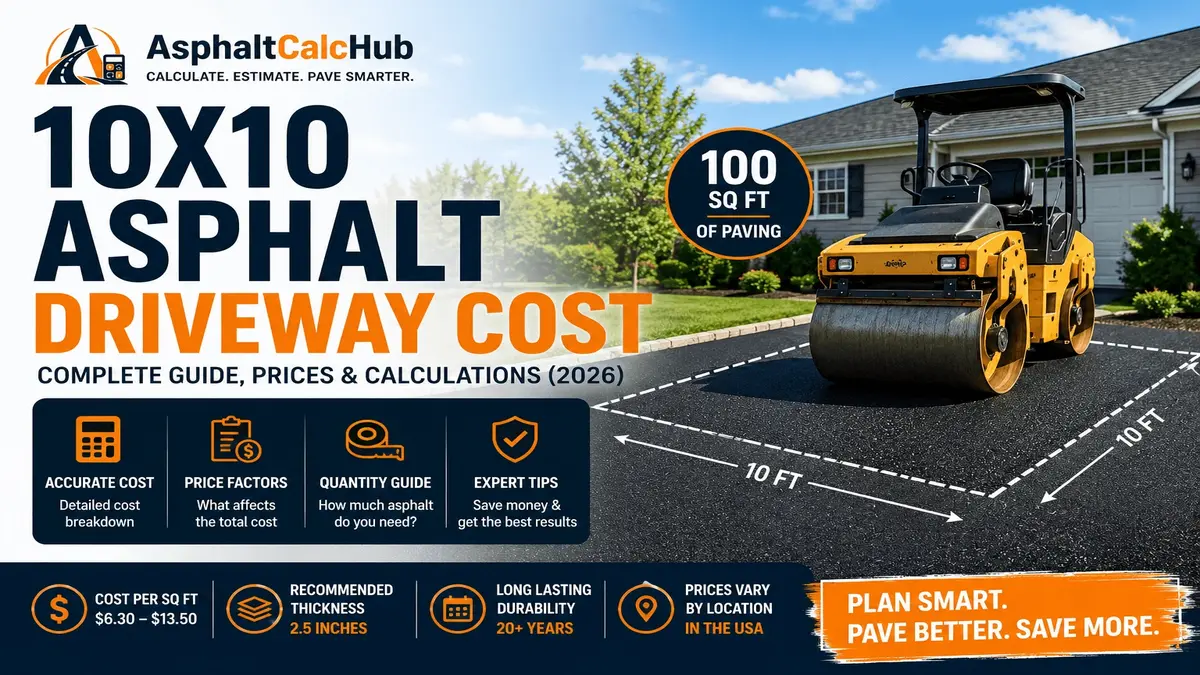
A 10×10 asphalt driveway (100 sq ft) typically costs $300–$800, with most homeowners paying $450–$650 for a standard installation. Most projects require 1.0–1.5 tons of hot mix asphalt and can usually be completed in one day.
A 10×10 asphalt driveway cost typically ranges from $300 to $800 in the United States, depending on asphalt thickness, site preparation, labor rates, and local material prices.
You’ll also learn how much asphalt you’ll need, the recommended thickness, installation costs, repair expenses, and practical tips to avoid overpaying.
In This Guide You’ll Learn
10×10 Asphalt Driveway Cost at a Glance
| Feature | Details |
| Driveway Size | 10 ft × 10 ft |
| Total Area | 100 sq ft |
| Square Yards | 11.1 sq yd |
| Square Meters | 9.29 m² |
| Typical Installation Cost | $300–$800 |
| Average Cost | $450–$650 |
| Recommended Asphalt Thickness | 2–3 inches |
| Asphalt Needed | 1.0–1.5 tons |
| Installation Time | About 1 day |
| Drive-On Time | 24–72 hours |
| Expected Lifespan | 15–25 years |
Note: Actual costs and asphalt quantity vary depending on pavement thickness, base preparation, local labor rates, and site conditions.
What Is a 10×10 Asphalt Driveway?
A 10×10 asphalt driveway covers 100 square feet, but it’s more accurately described as a small asphalt parking pad than a full residential driveway. While it’s too small for everyday vehicle parking, it’s an affordable and durable solution for compact paved areas around a home.
Homeowners commonly install a 10×10 asphalt pad for:
- Motorcycle parking
- Golf cart parking
- Utility trailer storage
- Trash bin pads
- Shed entrances
- Side-yard access
- Small equipment storage
- Extra paved space beside an existing driveway
Because the project requires less material than a standard driveway, it costs less overall. However, the price per square foot is often higher because contractors still have fixed expenses such as equipment transportation, setup, and asphalt delivery.
Is a 10×10 Driveway Big Enough?
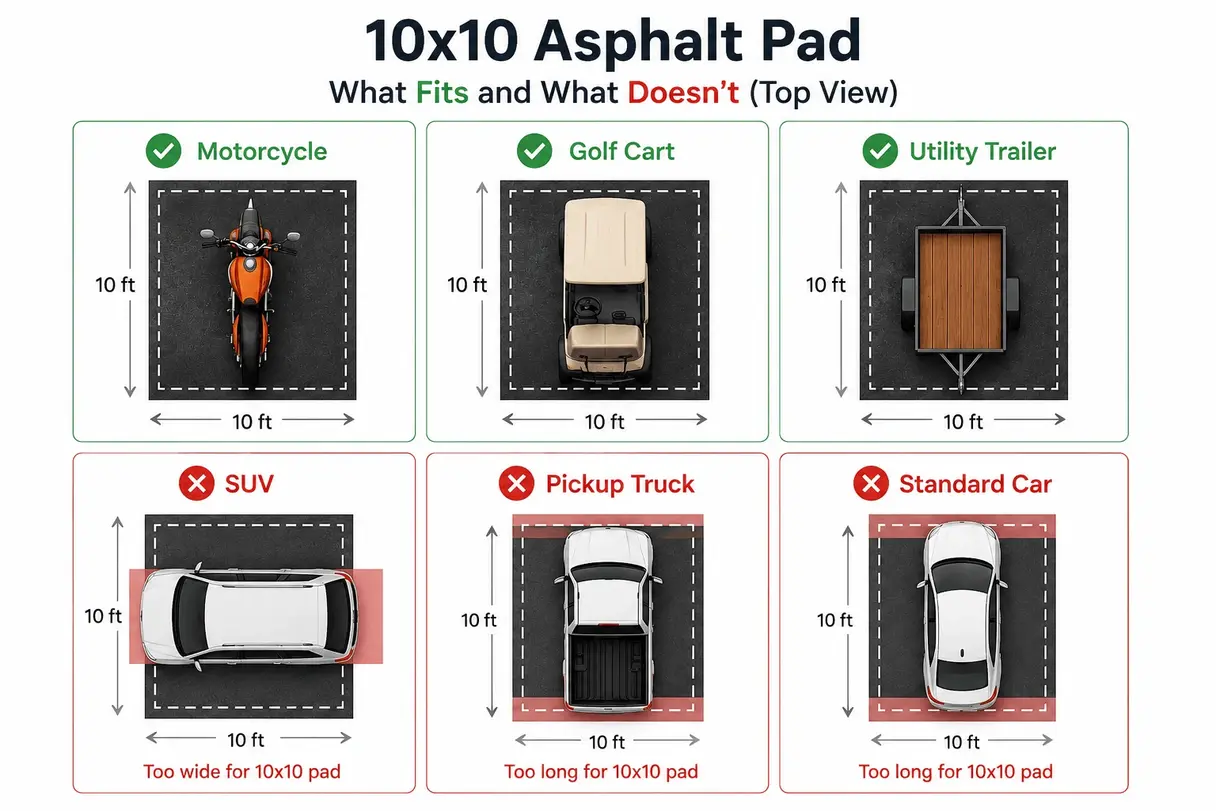
For most homeowners, no. A 10×10 asphalt surface isn’t large enough for a standard passenger vehicle because it’s only 10 feet long. Most cars measure 14–16 feet, while many SUVs and pickup trucks are even longer.
However, a 10×10 asphalt pad is an excellent choice for smaller applications where a full driveway isn’t necessary.
Best Uses for a 10×10 Asphalt Surface
| Use | Suitable? |
| Motorcycle Parking | ✅ Excellent |
| Golf Cart | ✅ Excellent |
| Utility Trailer | ✅ Good |
| Shed Access | ✅ Excellent |
| Trash Bin Pad | ✅ Excellent |
| Equipment Storage | ✅ Good |
| Compact Car | ⚠ Limited |
| SUV | ❌ Not Recommended |
| Pickup Truck | ❌ Too Small |
If your goal is daily vehicle parking, a 10×20 or 12×20 driveway provides a much more practical solution.
Can a Car Fit on a 10×10 Driveway?
Not comfortably. Since most passenger vehicles are longer than 10 feet, a portion of the vehicle will extend beyond the paved surface. Although a compact car may partially fit, a 10×10 area isn’t designed for regular vehicle parking.
| Driveway Size | Best For |
| 10×10 | Motorcycle, golf cart, parking pad |
| 10×20 | One compact car |
| 12×20 | One standard vehicle |
| 20×20 | Two small vehicles |
| 20×30 | Two vehicles with extra room |
If you expect to park a car every day, investing in a larger driveway usually provides better long-term value and convenience.
How Much Does a 10×10 Asphalt Driveway Cost?
A 10×10 asphalt driveway typically costs $300–$800, with the average homeowner spending $450–$650 for a standard residential installation. The total cost depends on several factors, including asphalt thickness, base preparation, local labor rates, accessibility, and whether an existing driveway must be removed.
Average Installation Cost
| Project Type | Estimated Cost |
| Budget Installation | $300–$450 |
| Average Residential Installation | $450–$650 |
| Premium Installation | $650–$800+ |
Small paving projects often cost more per square foot than larger driveways because contractors still need to transport equipment, prepare the site, and deliver hot mix asphalt, regardless of the project’s size.
Average Cost Per Square Foot
Residential asphalt paving generally costs $3–$8 per square foot across most U.S. markets. Small jobs like a 10×10 parking pad usually fall toward the higher end of that range because fixed project costs are spread over a smaller area.
| Cost per Sq Ft | Estimated Total Cost |
| $3 | $300 |
| $4 | $400 |
| $5 | $500 |
| $6 | $600 |
| $7 | $700 |
| $8 | $800 |
Money-Saving Tip: If you’re already paving a larger driveway, adding a 10×10 parking pad during the same project is usually much cheaper than scheduling it as a separate job.
What Affects the 10×10 Asphalt Driveway Cost?
Although a 10×10 asphalt driveway is a relatively small project, several factors can significantly affect the final price. Understanding these variables will help you compare contractor estimates and avoid unexpected costs.
1. Asphalt Thickness
The thicker the asphalt, the more material and labor the project requires. For most residential applications, 2–3 inches of compacted hot mix asphalt (HMA) provides the right balance of durability and cost.
If the surface will support heavier vehicles or trailers, your contractor may recommend a thicker pavement.
2. Base Preparation
A properly prepared aggregate base is one of the most important parts of any asphalt project. If the existing soil is weak or uneven, additional excavation, gravel, and compaction may be needed before paving begins.
A strong base helps:
- Support the pavement
- Improve drainage
- Reduce cracking
- Extend driveway life
3. Local Labor Rates
Labor costs vary across the United States. Projects in large cities generally cost more than those in rural areas because of higher wages, fuel prices, and operating expenses.
4. Existing Surface Removal
If an old asphalt or concrete surface must be removed before paving, demolition and disposal will increase the total project cost.
5. Site Accessibility
Projects with limited equipment access, steep slopes, or tight working spaces usually require more labor and time, which can increase installation costs.
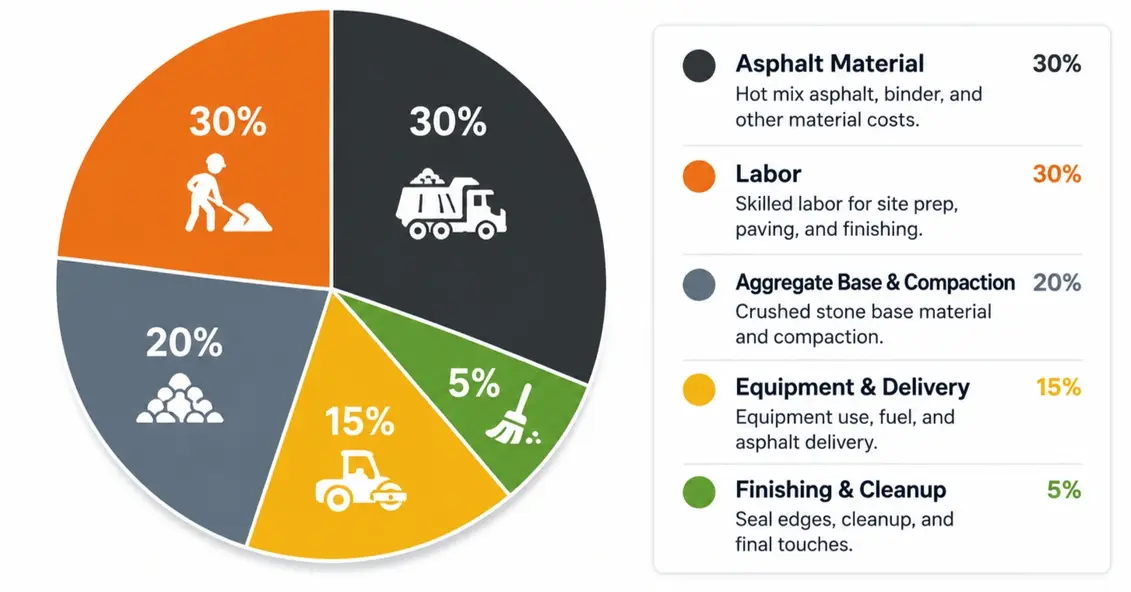
6. Cost Breakdown
Knowing where your money goes makes it easier to compare contractor quotes.
| Cost Category | Typical Share |
| Asphalt Material | 25–35% |
| Labor | 25–35% |
| Aggregate Base & Compaction | 15–25% |
| Equipment & Delivery | 10–20% |
| Finishing & Cleanup | 5–10% |
When comparing estimates, don’t focus only on the total price. Check whether the quote includes the asphalt thickness, base depth, excavation, cleanup, and warranty.
How Much Asphalt Is Needed for a 10×10 Driveway?
A 10×10 driveway covers 100 square feet, but the amount of asphalt required depends on the finished pavement thickness.
For most residential projects, you’ll need about 1.0–1.5 tons of hot mix asphalt installed over a properly compacted aggregate base.
Asphalt Needed by Thickness
| Compacted Thickness | Asphalt Needed |
| 2 inches | About 1.0 ton |
| 2.5 inches | About 1.25 tons |
| 3 inches | About 1.5 tons |
| 4 inches | About 2.0 tons |
These estimates are based on standard residential hot mix asphalt. Contractors usually order a little extra material to account for compaction and normal installation waste.
Pro Tip: Use our Asphalt Calculator to estimate the exact amount of asphalt needed based on your driveway size and desired thickness.
Recommended Asphalt Thickness
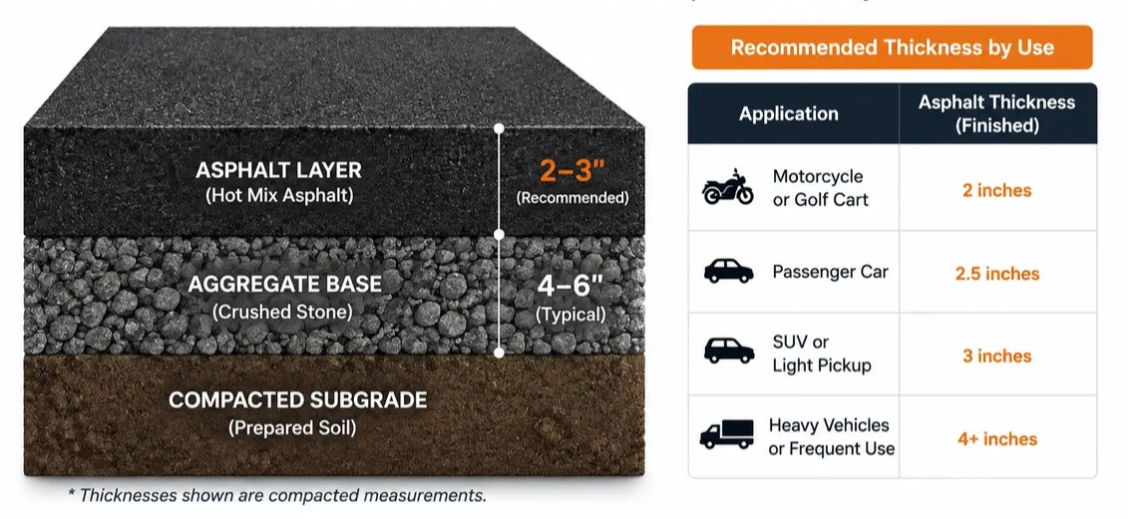
Choosing the correct thickness is just as important as selecting a qualified contractor.
For most residential 10×10 asphalt driveways, 2–3 inches of compacted asphalt provides excellent performance when installed over a stable aggregate base.
| Application | Recommended Thickness |
| Motorcycle or Golf Cart | 2 inches |
| Passenger Car | 2.5 inches |
| SUV or Light Pickup | 3 inches |
| Heavy Vehicles | 4+ inches |
These recommendations refer to the finished compacted thickness, not the loose asphalt placed before rolling.
How a 10×10 Asphalt Driveway Is Installed
A small asphalt project follows the same construction process as a full-size residential driveway.
1. Site Preparation
The contractor marks the work area, removes vegetation or debris, and checks the slope to ensure proper drainage.
2. Excavation
If necessary, weak soil is excavated to make room for the aggregate base and asphalt layer.
3. Aggregate Base Installation
Crushed stone is placed and compacted to create a stable foundation for the pavement.
4. Asphalt Placement
Hot mix asphalt is spread evenly across the prepared base and graded to promote water runoff.
5. Final Compaction
A steel drum roller compacts the asphalt to its specified thickness, creating a smooth and durable surface.
6. Curing
Most homeowners can walk on the new surface within a few hours, but vehicles should stay off the driveway for 24–72 hours, depending on weather conditions.
Read More Guide:
Old Driveway Removal Cost
If you’re replacing an existing driveway, demolition costs should be included in your budget.
| Existing Surface | Typical Cost |
| Old Asphalt | $1–$3 per sq ft |
| Concrete | $2–$6 per sq ft |
For a 100-square-foot project, removal typically costs:
- Old asphalt: $100–$300
- Concrete: $200–$600
If the existing base is still in good condition, an asphalt overlay may be an option.
However, full replacement is usually the better choice when the pavement has severe cracking, potholes, drainage problems, or a failed foundation.
10×10 Asphalt Driveway Repair Cost
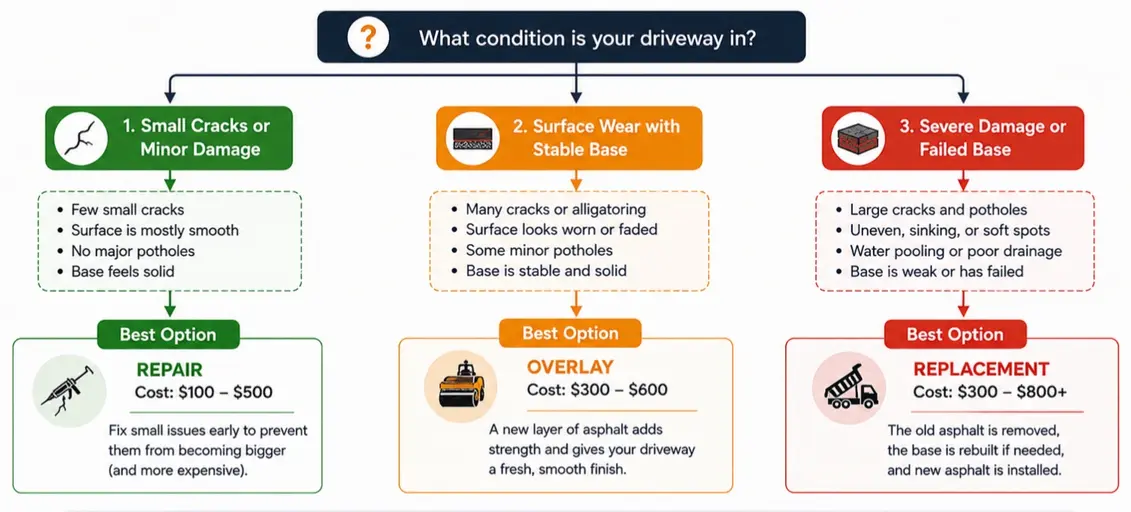
Even a well-built asphalt driveway will develop wear over time. Fixing small problems early is much cheaper than replacing the entire surface.
Average Repair Costs
| Repair Type | Typical Cost |
| Crack Filling | $100–$250 |
| Pothole Repair | $150–$350 |
| Asphalt Patching | $200–$500 |
| Sealcoating | $150–$300 |
| Asphalt Overlay | $300–$600 |
| Full Replacement | $300–$800+ |
Small cracks and potholes are usually inexpensive to repair. However, if the base has failed or drainage problems are causing repeated damage, replacing the driveway is often the better long-term investment.
Repair, Overlay, or Replacement?
| Option | Best For |
| Repair | Small cracks or isolated potholes |
| Overlay | Worn surface with a stable base |
| Replacement | Severe damage or failed base |
A qualified contractor can inspect the pavement and recommend the most cost-effective solution.
Tip: Repairing small cracks early is almost always cheaper than replacing damaged asphalt later.
Asphalt vs. Concrete
Asphalt and concrete are the two most common materials for residential driveways. The better choice depends on your budget, climate, and maintenance preferences.
| Feature | Asphalt | Concrete |
| Initial Cost | Lower | Higher |
| Installation Time | Faster | Slower |
| Repairs | Easier | More Difficult |
| Cold Climate Performance | Excellent | Good |
| Routine Maintenance | Sealcoating Required | Lower |
| Expected Lifespan | 15–25 Years | 25–35 Years |
For a small 10×10 parking pad, asphalt is usually the better value because it costs less to install and is easier to repair if damage occurs.
Maintenance Tips
Routine maintenance helps extend the life of your driveway and reduces the risk of expensive repairs.
| Schedule | Maintenance |
| Monthly | Remove debris and clean oil stains |
| Every Spring | Inspect for cracks and drainage issues |
| Every 2–3 Years | Apply sealcoat |
| As Needed | Repair cracks and potholes promptly |
Simple Maintenance Checklist
- Sweep leaves and dirt regularly.
- Clean oil spills as soon as possible.
- Repair cracks before they grow.
- Sealcoat every 2–3 years.
- Avoid parking heavy equipment in the same spot for long periods.
How to Save Money on a 10×10 Asphalt Driveway
Because small paving jobs have fixed equipment and delivery costs, homeowners often pay more per square foot than they would for a larger driveway. These tips can help reduce your overall cost.
- Get at least three written estimates.
- Compare what’s included—not just the total price.
- Schedule your project when a contractor is already working nearby.
- Combine your project with a neighbor’s to reduce delivery costs.
- Repair the driveway instead of replacing it if the base is still in good condition.
Before You Hire a Contractor
Ask these questions before signing a contract:
- What is the finished asphalt thickness?
- How deep will the aggregate base be?
- Is excavation included in the estimate?
- Will the driveway be graded for proper drainage?
- Does the price include cleanup and debris removal?
- Is a workmanship warranty included?
A detailed written estimate makes it much easier to compare contractors and avoid unexpected costs later.
FAQ for 10×10 Asphalt Driveway Cost
How much does a 10×10 asphalt driveway cost?
A 10×10 asphalt driveway typically costs $300–$800, with most homeowners spending $450–$650 for a standard residential installation.
How much asphalt is needed for a 10×10 driveway?
Most projects require 1.0–1.5 tons of hot mix asphalt, depending on the finished pavement thickness.
Is a 10×10 driveway large enough for a car?
No. A 10×10 driveway is generally too small for everyday vehicle parking. It works best as a parking pad for motorcycles, golf carts, trailers, or small equipment.
What is the best asphalt thickness for a 10×10 driveway?
For most residential projects, 2–3 inches of compacted asphalt over a properly prepared aggregate base provides the best balance of durability and cost.
How long does installation take?
Most 10×10 asphalt driveways can be installed in one day, provided weather and site conditions are favorable.
How long should I wait before driving on new asphalt?
Wait 24–72 hours before driving on new asphalt. Your contractor may recommend a longer curing period during hot weather.
How long does a 10×10 asphalt driveway last?
With proper installation and routine maintenance, a 10×10 asphalt driveway can last 15–25 years.
Is asphalt cheaper than concrete?
Yes. Asphalt usually has a lower upfront cost and is generally less expensive to repair than concrete.
Do I need a permit for a 10×10 asphalt driveway?
It depends on your city or county. Check with your local building department before starting the project.
Can I install a 10×10 asphalt driveway myself?
DIY installation is possible, but professional installation is recommended to ensure proper excavation, base compaction, drainage, and long-term durability.
Conclusion
A 10×10 asphalt driveway is a practical and affordable choice for homeowners who need a small parking pad for motorcycles, golf carts, utility trailers, or similar uses. With the right asphalt thickness, a properly compacted aggregate base, and routine maintenance, it can provide 15–25 years of reliable performance.
Before starting your project, compare contractor estimates carefully and use our Asphalt Calculator to estimate the material and total cost more accurately.
Source
- National Asphalt Pavement Association (NAPA)
- Federal Highway Administration (FHWA)
- Asphalt Institute